

The metal with the highest price tag at the jewelry counter might actually be the most affordable choice for your future. While gold spot prices have climbed toward $5,000 an ounce in 2026, the real debate of platinum vs white gold for engagement rings comes down to more than just the daily market rate. You likely want a ring that feels substantial and remains brilliantly white without the constant worry of it turning yellow or irritating sensitive skin. We understand that this is a significant investment in your story; you deserve a choice that stands up to your lifestyle here in San Diego.
It's natural to feel confused by maintenance needs like rhodium plating or to worry about how a band might thin over the decades. This 2026 guide clarifies the critical differences in durability, upkeep, and total cost of ownership to ensure your selection lasts a lifetime. We will explore why platinum's natural patina differs from white gold's mirror-like finish and how each metal responds to the bumps and scrapes of daily activity. By the end, you'll have the confidence to choose a metal that truly protects your diamond and your legacy.
Key Takeaways
- Understand why platinum's 95% purity makes it the ideal choice for those with metal allergies or highly active lifestyles.
- When weighing platinum vs white gold for engagement rings, consider the long-term maintenance of rhodium plating versus the natural, grayish-white patina of noble metals.
- Discover how platinum's density ensures no metal is lost over time, providing a more secure foundation for your diamond than gold alloys.
- Evaluate the 2026 value proposition by comparing the substantial weight and fabrication requirements that define a high-end precious metal investment.
Understanding the Composition: What Makes White Gold and Platinum Unique?
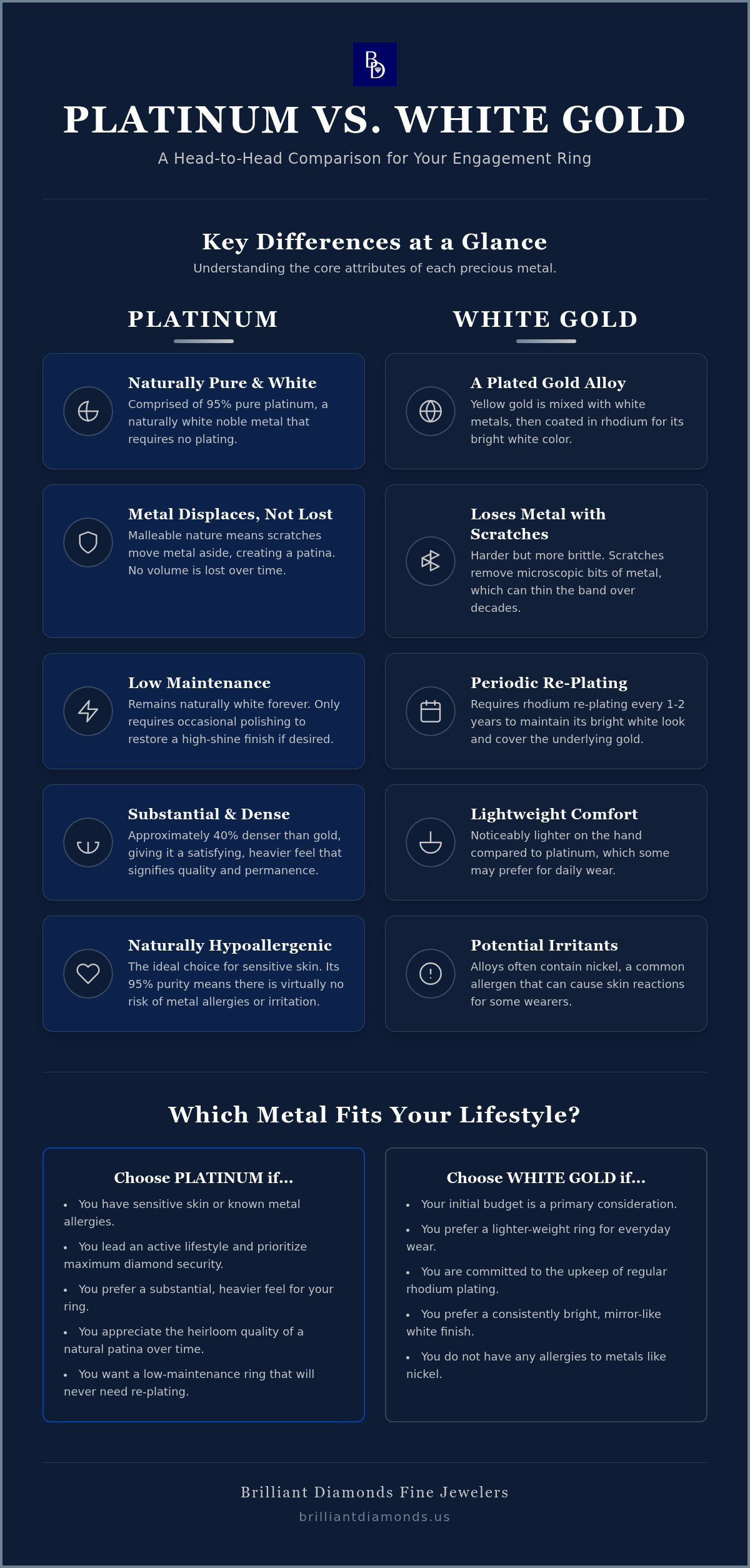
Choosing between these metals starts with understanding what's actually inside the band. White gold isn't a naturally occurring metal. It's a blend created by mixing pure yellow gold with white metals like nickel or palladium to dilute the yellow hue. Platinum is different. It's a naturally white noble metal. In our San Diego showroom, we prioritize 950 Platinum, which is 95% pure. This high purity level is a defining characteristic when evaluating platinum vs white gold for engagement rings.
Density also changes the physical experience of wearing your ring. Platinum is roughly 40% denser than gold. If you hold a platinum solitaire and a white gold solitaire of the same size side-by-side, the platinum piece feels significantly heavier. This weight provides a sense of security and permanence that many of our clients prefer for their lifelong commitment.
The Role of Rhodium Plating in White Gold
Even after alloying, white gold often retains a subtle, warm tint. To achieve that signature mirror-like luster, jewelers use an electroplating process to coat the ring in rhodium. Rhodium is a rare member of the platinum family that provides a brilliant, icy finish. Because this is a surface coating, it eventually wears down through daily contact, making regular maintenance a part of the white gold experience.
Platinum Purity and the Hypoallergenic Advantage
Because platinum is 95% pure, it's naturally hypoallergenic. Platinum's chemical properties make it incredibly resistant to corrosion and tarnishing, which is vital for anyone with sensitive skin. Some white gold alloys contain nickel to help achieve their color. This can lead to skin irritation or "nickel itch" for certain wearers. Choosing platinum eliminates this risk, offering a pure metal that remains gentle on your skin for decades to come.
Durability and Maintenance: How Your Ring Ages Over Time
Living in San Diego means your jewelry faces sand, salt air, and constant outdoor activity. These elements reveal the true nature of your metal choice over time. When you compare platinum vs white gold for engagement rings, the most striking difference is how they handle daily wear. Platinum is a malleable metal. When it gets scratched, the metal doesn't flake away; it merely shifts aside. This displacement creates a soft, matte finish known as a patina, which many find adds a storied, heirloom character to the piece.
White gold behaves differently. It's harder and more scratch-resistant than platinum, but it's also more brittle. Each scratch actually removes a microscopic amount of metal from the surface. Over several decades, this can lead to a thinner band or weakened prongs. Maintenance cycles also differ significantly. White gold requires rhodium re-plating every one to two years to hide the natural warm tint of the gold. Platinum stays white forever, though it needs occasional professional polishing if you prefer a mirror-like shine over the natural patina.
Long-Term Structural Integrity
Platinum's unique grip makes it an exceptional choice for securing high-value natural diamonds. While white gold prongs can occasionally snap if they're struck with enough force, platinum prongs tend to bend instead. This ensures your center stone remains safely in place during your daily routine. We often suggest platinum for clients with active lifestyles who want the highest level of security for their investment.
The Aesthetic Evolution: Patina vs. High-Shine
Your decision often depends on which aging process you find more appealing. Some couples love the lived-in look of aged platinum. Others prefer the crisp, bright white that only fresh rhodium plating provides. If your ring loses its luster, our on-site fine jewelry repair services can restore either metal to its original glory. We invite you to reach out to us to see side-by-side examples of how these metals evolve over the years.
Cost and Value in 2026: Balancing the Investment
Evaluating the price of engagement rings in 2026 requires looking past simple spot prices. While gold has reached historic highs near $5,000 per ounce, platinum often remains the more significant upfront investment. This happens because of density and labor. A platinum ring weighs roughly 60% more than the same design in gold. Since you pay for the total weight of the metal used, the "heavier" metal naturally carries a higher price tag.
Craftsmanship also plays a role. Platinum has a much higher melting point than gold alloys, requiring specialized equipment and more time at the jeweler's bench. You should also consider the lifetime cost of ownership. White gold requires rhodium re-plating every one to two years to maintain its color. Over the decades, these recurring maintenance visits can add up, eventually narrowing the price gap between the two metals. Platinum’s higher initial cost is often offset by its minimal maintenance needs.
Metal Rarity and Market Volatility
Market trends for platinum vs white gold for engagement rings have shifted significantly this year. Despite gold's higher price per ounce, platinum is 30 times rarer in the earth's crust. This rarity provides a level of prestige and intrinsic value that remains stable even when market volatility affects gold prices. Choosing platinum means you're investing in a metal that is both scarce and pure.
Resale and Trade-In Considerations
The purity of your metal affects its long-term asset value. A platinum band is 95% pure precious metal, whereas 14k gold is only 58.3% gold. This high concentration of noble metal often leads to better recovery values. As professional diamond buyers, we look at the total weight and purity of the piece. We invite you to contact us today to discuss which metal choice best supports your long-term financial and aesthetic goals.
Making the Decision: Which Metal Fits Your Lifestyle?
Choosing the right foundation for your commitment often depends on your daily routine. If you work extensively with your hands or have skin sensitivities, platinum is usually the superior choice. Its naturally hypoallergenic properties and "grippy" prongs offer unparalleled security for your stone. Conversely, if you prefer a lightweight feel and the brightest possible mirror-like finish, white gold might be your perfect match. Your choice should also consider how the metal color interacts with specific diamond ring cuts. A high-polish white gold band can make a colorless round brilliant appear even icier, while platinum's slightly cooler tone complements emerald and cushion cuts beautifully.
Custom Design Flexibility
Many couples find that a single metal doesn't meet all their needs. Through custom design jewelry, you can actually mix metals for both style and security. We often design rings with a 14k or 18k white gold band for its rigidity and lightweight feel, paired with platinum prongs to ensure the center stone is held by the most durable material available. Our San Diego experts use advanced CAD modeling to help you visualize these combinations before we ever cast the metal.
Your Next Steps at Brilliant Diamonds
Reading about metal properties is helpful, but nothing replaces the physical experience of a side-by-side comparison. We invite you to book an appointment at one of our San Diego locations. During your personal consultation, you can feel the substantial weight difference of platinum vs white gold for engagement rings and see how different finishes look against your skin tone. Our goal is to ensure you leave with total confidence that your investment will last for generations. We take pride in building a lifelong professional relationship with every couple who walks through our doors.
Securing Your Legacy with the Perfect Metal Choice
Your engagement ring is a permanent symbol of your shared future. Whether you choose the substantial, enduring weight of platinum or the brilliant, mirror-like finish of white gold, your decision should align with your aesthetic taste and your daily activity level. Understanding the nuances of platinum vs white gold for engagement rings ensures your investment remains as beautiful in fifty years as it is today. It's a choice that defines how your jewelry will age alongside your relationship.
At Brilliant Diamonds, we're committed to your journey through transparent education and expert craftsmanship. Our GIA Certified Diamond Specialists are here to guide you across our two San Diego locations, providing the lifelong maintenance and care your fine jewelry deserves. We invite you to Schedule a Consultation to Compare Metals in Person and feel the physical weight difference for yourself. We look forward to helping you select a foundation that truly stands the test of time.
Frequently Asked Questions
Does white gold eventually turn yellow?
White gold develops a warm, yellowish tint over time as the rhodium plating wears away. Since white gold is an alloy containing pure yellow gold, it isn't naturally white. Regular wear eventually exposes the underlying metal's true color. To maintain that icy, mirror-like finish, you'll need to visit our showroom for professional replating, which restores the bright white luster you chose on day one.
Is platinum more scratch-resistant than white gold?
Actually, white gold is harder and more scratch-resistant than platinum, but it's less durable over the long term. When you evaluate platinum vs white gold for engagement rings, remember that platinum displaces rather than loses metal when scratched. This creates a soft patina. White gold loses microscopic amounts of metal with every scratch, which can eventually lead to a thinner band after decades of professional polishing.
How often do I need to replate my white gold engagement ring?
Most wearers find that their white gold engagement ring requires rhodium replating every 12 to 24 months. Your individual body chemistry and how often you work with your hands will influence this schedule. If you're active or frequently use hand sanitizers and lotions, you might notice the yellowish tint appearing sooner. We provide these maintenance services on-site at our San Diego locations to keep your investment looking pristine.
Can I change a white gold setting to platinum later?
Can I change a white gold setting to platinum later?
Article by
Ariel Berko
Ariel has been working in the diamond industry in San Diego since 1995, bringing decades of hands-on experience and a deep-rooted family background in fine jewelry. A graduate of the Gemological Institute of America (GIA), he is highly trained in diamonds and known for his expertise in both diamond selection and custom jewelry design.
Over the years, Ariel has built a reputation for guiding clients with honesty, precision, and a personalized approach—helping them confidently choose diamonds and create pieces that are both meaningful and enduring.


