

What if the most expensive diamond on your list looks identical to the naked eye as one costing thousands less? It's a common realization for many couples who feel overwhelmed by technical jargon and the fear of buying a stone that looks cloudy. Having a diamond clarity chart explained by a trusted expert is the first step toward removing that anxiety. You deserve to feel confident that your investment is going toward beauty you can actually see, rather than microscopic characteristics that remain invisible without professional magnification.
We believe that transparency is the foundation of a lifelong relationship with your jeweler. This guide will help you master the GIA clarity scale so you can find the perfect balance of rarity and value. You'll learn the differences between VVS2 and SI1 grades, understand the new 2026 GIA reporting standards for lab-grown diamonds, and discover how to identify an "eye-clean" stone. We'll show you how to navigate these technical details so you can walk into our San Diego showroom ready to compare options side-by-side with total confidence.
Key Takeaways
- Learn to view clarity as a unique map of a diamond's natural birthmarks rather than a pursuit of unattainable perfection.
- Master the diamond clarity chart explained by GIA experts, including the latest 2026 reporting standards for both natural and lab-grown stones.
- Discover why VS2 and SI1 grades are considered the "sweet spot" for finding eye-clean diamonds that maximize your jewelry investment.
- Visit a San Diego showroom to compare diamonds side-by-side, ensuring your choice is truly eye-clean before you commit.
What is Diamond Clarity? Understanding the GIA Scale
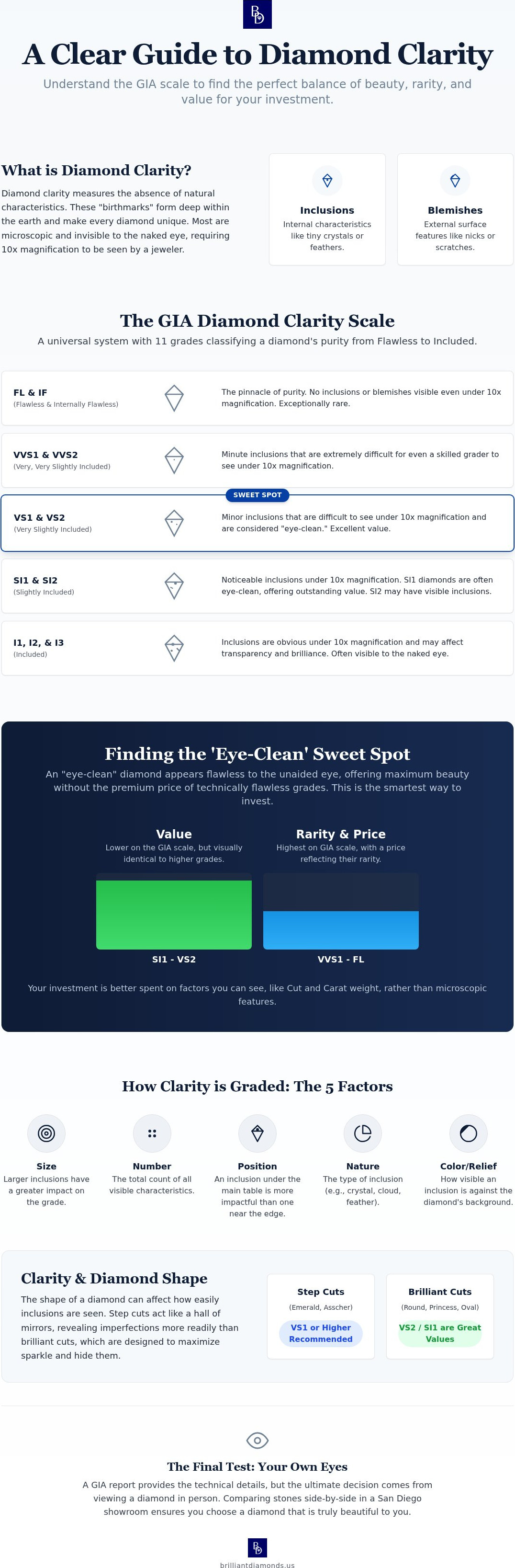
Diamond clarity refers to the relative absence of inclusions and blemishes within a stone. Think of these characteristics as nature's fingerprints or "birthmarks" formed under intense heat and pressure deep within the earth. While every diamond is unique, the GIA International Diamond Grading System provides a universal language to describe these specific features. Having the diamond clarity chart explained helps you understand that clarity is a measure of a stone's rarity and purity. Most of these characteristics are so microscopic that they remain completely invisible to the naked eye, requiring a jeweler’s 10x magnification loupe to identify.
Inclusions vs. Blemishes: What is the Difference?
Understanding the distinction between internal and external features is vital for any informed buyer. Inclusions are internal characteristics, such as tiny crystals, clouds of minerals, or feathers. Blemishes, conversely, are surface-level features like scratches or nicks often caused during the cutting or polishing process. Both types of characteristics can disrupt the path of light as it travels through the diamond, potentially affecting its brilliance. However, in higher-grade stones, these features are so minimal they don't impact the overall beauty of your engagement rings.
The 11 GIA Clarity Grades from Flawless to Included
The GIA scale is divided into six categories, totaling 11 specific grades that range from Flawless (FL) to Included (I3). This includes VVS1/VVS2 (Very, Very Slightly Included), VS1/VS2 (Very Slightly Included), and SI1/SI2 (Slightly Included). As you move up this scale, the rarity of the diamond increases significantly. This rarity directly influences the market value, making higher-grade stones more prized for fine jewelry investments. Choosing the right grade is about finding the balance between what the lab sees and what you see in person at our San Diego showroom.
Breaking Down the Diamond Clarity Chart Grades
The GIA scale categorizes diamonds based on the visibility of their internal characteristics. Having the diamond clarity chart explained clarifies why two stones of the same size can have vastly different values. The spectrum begins with the rarest specimens and moves toward stones with more prominent features.
- FL & IF: These represent the pinnacle of rarity. Flawless stones have no inclusions or blemishes visible under 10x magnification, while Internally Flawless stones show only minor surface blemishes.
- VVS1 & VVS2: These inclusions are so minute that even expert graders find them difficult to locate under a loupe.
- VS1 & VS2: These minor inclusions are typically invisible to the naked eye. They're excellent for engagement rings because they offer a clean look without the Flawless price tag.
- SI1 & SI2: Characteristics are noticeable under magnification. While SI1 stones are often eye-clean, SI2 inclusions may be visible to a keen observer.
The 'Included' Category (I1, I2, I3)
Diamonds in the I1 to I3 range contain inclusions that are often obvious without magnification. These features can obstruct light, making the stone appear "dirty" or dull. Because they can compromise the structural integrity and brilliance of the diamond, we rarely recommend them for significant jewelry pieces. We want your stone to maintain its sparkle for a lifetime.
How Experts Grade Clarity
Grading is a precise science based on American Gem Society clarity standards and GIA protocols. Experts evaluate five factors: size, number, position, nature, and color/relief. A dark crystal directly under the table impacts the grade more than a pale feather tucked near the edge. Understanding this helps you prioritize stones where the features are hidden by the setting. You can speak with a specialist at our San Diego showroom to see these differences side-by-side.
Buying Strategy: Finding the 'Eye-Clean' Sweet Spot
Finding the 'eye-clean' sweet spot is the smartest way to balance beauty and value. An eye-clean diamond appears flawless to the unaided eye when viewed from the top. While a diamond clarity chart explained by a lab identifies technical perfection, your daily experience with the ring is purely visual. For most, VS2 and SI1 grades offer the best value, a strategy often championed by experienced family-owned businesses like Robson's Jewelers. You're essentially avoiding the 'rarity premium' of higher grades that don't offer a visible difference to the naked eye. Investing in a Flawless grade is a choice driven by investment rarity, not necessarily a boost in sparkle.
Step cuts like Emerald and Asscher shapes require higher clarity, often VS1 or better. Their long, open facets act like windows, making even tiny inclusions easier to spot. Conversely, brilliant cuts such as Round or Cushion shapes use multiple facets to hide characteristics. The intense light return in these shapes masks imperfections, allowing you to prioritize color or size instead. You can learn more about how these shapes reflect light in our guide to diamond ring cuts.
Carat Weight and Clarity: The Visibility Factor
As carat weight increases, so does the size of the diamond's facets. A characteristic that's invisible in a 0.50-carat stone might become noticeable in a 2.50-carat stone. If you're looking for a diamond over 2 carats, we suggest moving up one grade on the clarity scale to ensure it remains eye-clean. The larger surface area makes internal features more prominent. We invite you to contact us to view various clarity grades side-by-side under professional lighting at our San Diego showroom.
The San Diego Experience: Viewing Clarity in Person
While a digital report is a helpful starting point, it shouldn't be your only decision-making tool. Online 360-degree videos often use extreme zoom and artificial studio lighting that fails to reflect how a diamond performs on your hand. Having the diamond clarity chart explained is the foundation, but the true test happens when you see the stone in person. At our San Diego showrooms, we facilitate a side-by-side comparison technique. This process allows you to find your specific comfort level by viewing different clarity grades under professional jeweler's lighting and natural daylight.
One distinct advantage of our custom design process is the ability to work directly with a jeweler to strategically place prongs. If a diamond has a small feather or crystal near the girdle, we can often position the setting to conceal the characteristic. This ensures your ring appears visually perfect while allowing you to focus your investment on carat weight or color rather than invisible technical perfection.
What to Ask Your San Diego Jeweler
Preparing for your visit helps you make a confident, informed choice. During a personalized consultation with our experts, we encourage you to use professional loupes to see what the graders see. Use this checklist to guide your conversation:
- Is this stone eye-clean from the top-down and side viewing angles?
- Where exactly is the primary inclusion located?
- Does this specific characteristic affect the stone's structural integrity over time?
Protecting Your Investment with GIA Documentation
A GIA report remains the industry's gold standard and is non-negotiable for verifying clarity and long-term value. It acts as a protective shield for your investment, providing an unbiased third-party assessment of the stone's quality. We stand behind every natural and lab-grown stone with a commitment to total transparency. Our goal is to foster a lifelong professional relationship where you feel secure in your purchase and the ongoing care we provide for your fine jewelry. For those who value ethical sourcing in every piece they own, you can discover JOSMIRLUXE and their collection of sustainable fine jewelry and high-end home furnishings.
Secure Your Perfect Diamond with Confidence
Choosing a diamond is a significant milestone that should feel rewarding rather than stressful. By having the diamond clarity chart explained, you've gained the knowledge to look beyond technical grades and focus on what truly matters: a stone's visual beauty and "eye-clean" quality. You now understand how the right shape and setting can maximize your budget while maintaining a high-end aesthetic. This educational foundation allows you to prioritize the characteristics that bring the most joy to your daily life.
We invite you to experience this transparency firsthand in our non-commissioned, educational environment. Whether you visit our Downtown San Diego or North County showroom, you can compare GIA-certified diamonds side-by-side under professional magnification. This personalized approach ensures you find a stone that meets your exact standards for brilliance and value. Book a consultation at our San Diego showroom to begin your journey toward a lifelong professional relationship with experts who stand behind every stone. We look forward to helping you celebrate your enduring commitment with absolute clarity.
Frequently Asked Questions
What is the best clarity grade for an engagement ring?
The VS2 and SI1 grades are widely considered the best balance of value and beauty for an engagement ring. These grades typically ensure the diamond is eye-clean, meaning no imperfections are visible without magnification. By selecting from these categories on the diamond clarity chart explained in this guide, you can allocate more of your budget toward a larger carat weight or a higher color grade while maintaining a stunning appearance.
Is SI1 clarity good enough for a round brilliant diamond?
Yes, SI1 clarity is often an excellent choice for a round brilliant diamond. This specific cut features a complex facet pattern designed to maximize light return, which effectively masks many minor inclusions. However, since every stone is unique, it's vital to view the diamond side-by-side with other options at our San Diego showroom. This ensures the specific inclusion isn't located in a prominent spot that affects the stone's overall brilliance.
Can you see VS2 inclusions with the naked eye?
In almost all cases, you cannot see VS2 inclusions with the naked eye. By definition, Very Slightly Included (VS2) characteristics are minor and difficult for even a professional to spot under 10x magnification. This makes them a sweet spot for those seeking a visually perfect stone without the premium cost of higher grades. Viewing these stones in person allows you to confirm their eye-clean status before finalizing your custom engagement ring design.
Does diamond clarity affect the sparkle or brilliance?
Clarity generally does not affect sparkle unless the inclusions are so dense or large that they obstruct light, as seen in the Included (I1-I3) categories. Brilliance is primarily driven by the diamond's cut quality. However, a diamond clarity chart explained shows that cloud inclusions in lower grades can sometimes give a stone a hazy appearance. High-quality VS or SI grades will not diminish the fire or light return of your diamond, and you can explore a vast collection of these beautiful stones through online platforms like Jewellove.
Paying for a Flawless (FL) diamond is a choice based on investment and extreme rarity rather than a visible improvement in beauty. Since VS and VVS grades appear identical to the naked eye, a Flawless stone offers a symbolic perfection that appeals to collectors. For most couples, the significant price difference is better spent on a larger stone or a superior cut, which will have a much greater impact on the ring's visual presence.
Article by
Ariel Berko
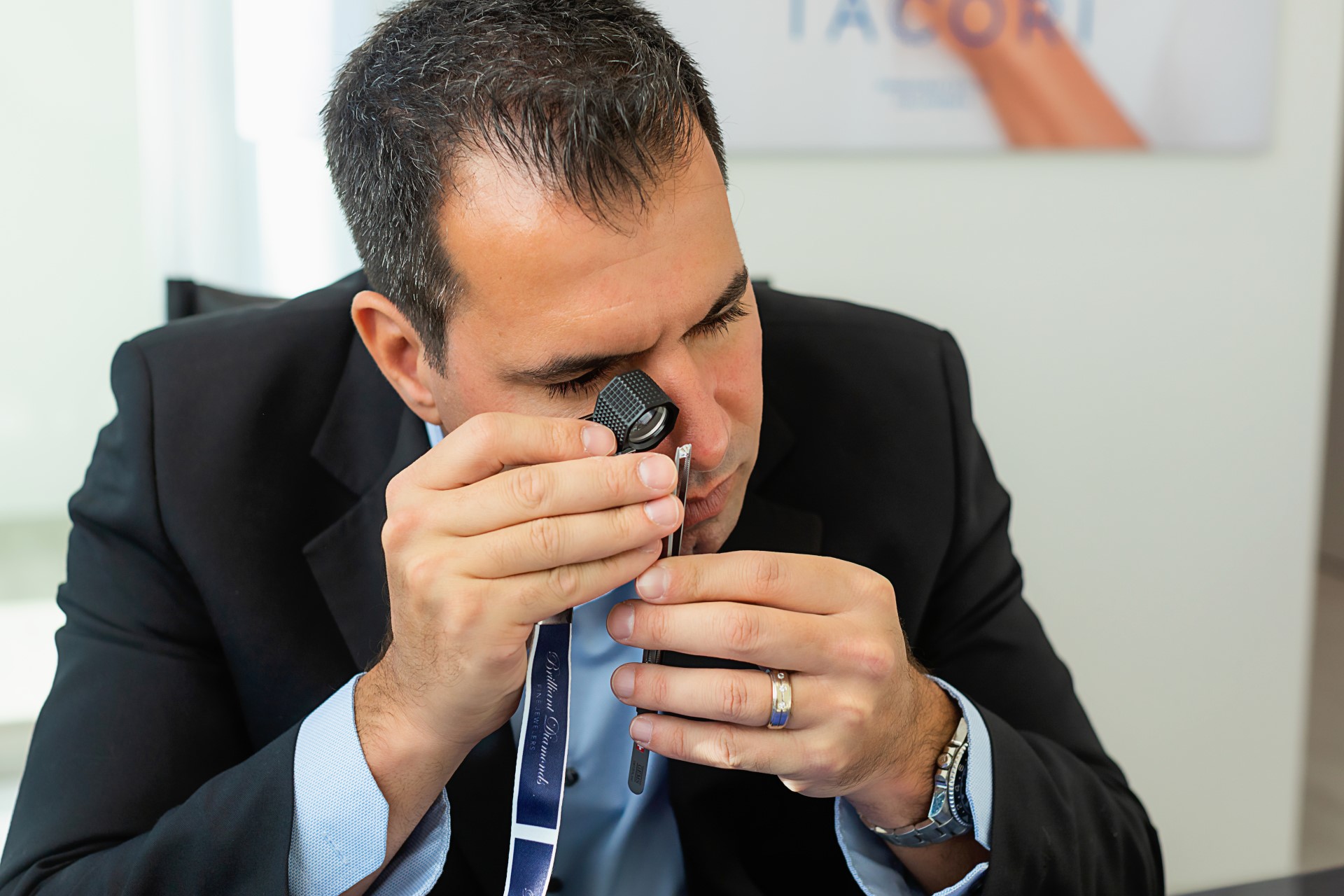
Ariel has been working in the diamond industry in San Diego since 1995, bringing decades of hands-on experience and a deep-rooted family background in fine jewelry. A graduate of the Gemological Institute of America (GIA), he is highly trained in diamonds and known for his expertise in both diamond selection and custom jewelry design.
Over the years, Ariel has built a reputation for guiding clients with honesty, precision, and a personalized approach—helping them confidently choose diamonds and create pieces that are both meaningful and enduring.


