

How can you tell whether a diamond is worth its price without feeling rushed to decide? If you’re preparing to shop engagement rings, it helps to understand quality, documentation, and the differences between natural and lab-grown diamonds before making a lasting purchase.
The right ring should reflect your story, not a sales target. This guide explains how to compare diamond reports, weigh natural and lab-grown options, and narrow down settings that suit the wearer’s style. You’ll also learn what to ask about custom design so you can make each decision with greater confidence.
In San Diego, seeing diamonds side by side and speaking directly with a jeweler can make unfamiliar details easier to assess. We’ll cover questions to ask, signs of clear guidance, and how to choose a local jeweler who can support your ring beyond the day you buy it.
Key Takeaways
- Before you shop engagement rings, set priorities for quality, budget, and the kind of guidance you want from a jeweler.
- Compare natural and lab-grown diamonds by considering their origins, documentation, and different value profiles.
- Use the wearer’s style and daily routine to narrow down settings, from classic solitaires to vintage-inspired and custom designs.
- View diamond options side by side to see how lighting and metal color affect their appearance before making your choice.
Navigating the Engagement Ring Search: Where to Begin
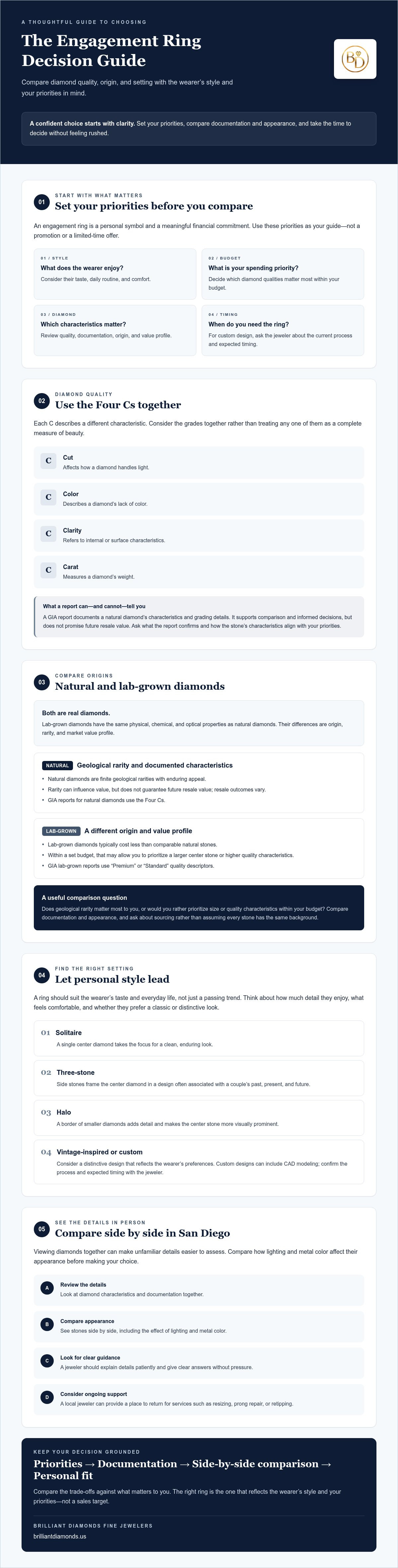
An engagement ring is a personal symbol and a meaningful financial commitment. Before comparing settings or responding to a limited-time offer, decide what matters most: the wearer’s style, your budget, the diamond’s qualities, and your timeline. This gives you a clear basis for questions and helps you shop engagement rings without feeling pushed into a quick choice.
Rather than starting with promotions or browsing styles at random, compare a diamond’s documentation, appearance, and trade-offs against your priorities. For a broader perspective on the history and tradition of engagement rings, consider how a ring’s meaning can be both personal and cultural.
The Framework for a Confident Purchase
Use the Four Cs to compare diamonds: Cut affects how a diamond handles light, Color describes its lack of color, Clarity refers to internal or surface characteristics, and Carat is its weight. Consider the grades together rather than treating any one of them as a complete measure of beauty. For natural diamonds, a GIA report provides an independent assessment and is widely regarded as the industry gold standard. Rarity can influence a natural diamond’s value, but it doesn’t guarantee future resale value. Ask what the report confirms and how the stone’s characteristics align with your priorities.
Set a timeline before you begin. If you’re considering custom engagement ring design, allow time for design decisions and ask the jeweler to confirm the current process and expected timing. Brilliant Diamonds Fine Jewelers offers CAD modeling for custom designs, so discuss timing directly before moving forward.
The Local San Diego Advantage
A local jeweler gives you the chance to ask questions face to face, review diamond details, and compare stones in person. A physical location also gives you somewhere to return for services such as ring resizing, prong repair, or retipping. In San Diego, look for patient explanations and clear answers rather than pressure or discounts that are difficult to evaluate. Explore engagement rings in San Diego with your priorities in mind, and choose a jeweler who can help you make an informed decision and support your ring over time.
Selecting the Perfect Diamond: Natural vs. Lab-Grown Standards
Natural and lab-grown diamonds can both be beautiful choices, but they suit different priorities. Lab-grown diamonds have the same physical, chemical, and optical properties as natural diamonds. Their differences are origin, rarity, and market value profile. As you shop engagement rings, consider whether geological rarity matters more to you, or whether you’d rather prioritize size or quality characteristics within your budget.
Natural GIA Certified Diamonds
A GIA report documents a natural diamond’s characteristics and grading details, giving you information to compare with what the jeweler tells you. It supports an informed purchase, but it isn’t a promise of future resale value. Natural diamonds are finite geological rarities with enduring appeal, though resale outcomes vary. For a closer look at the distinctions, read this 2026 comparison guide.
The Rise of Laboratory-Grown Diamonds
Because lab-grown diamonds typically cost less than comparable natural stones, they may let you prioritize a larger center stone or higher quality characteristics within a set budget. Brilliant Diamonds Fine Jewelers offers ethically sourced natural diamonds and sustainable lab-grown options. Ask about sourcing and documentation rather than assuming every stone has the same background.
Both are real diamonds, but they can suit different buyer priorities. Their grading systems also differ: GIA reports for natural diamonds use the Four Cs, while its lab-grown reports use “Premium” or “Standard” quality descriptors. Neither option is automatically right for every couple. Compare the documentation and appearance, consider how much rarity matters to you, and choose what fits your values and budget. To talk through the options, speak with a diamond expert.
Finding Your Style: From Timeless Solitaires to Custom Creations
A ring should suit the wearer’s taste and everyday life, not just a passing trend. As you shop engagement rings, consider how much detail they enjoy, what feels comfortable for daily wear, and whether they prefer a classic or distinctive look. These preferences can help narrow the options before you compare settings.
Classic and Modern Ring Styles
- Solitaire: A single center diamond takes the focus, creating a clean, enduring look.
- Three-stone: Side stones frame the center diamond in a design often associated with a couple’s past, present, and future.
- Halo: A border of smaller diamonds adds detail and makes the center stone more visually prominent.
- Vintage-inspired: Fine details and heirloom-influenced design bring a romantic, distinctive character.
The diamond’s shape and cut can change how each setting looks. Explore how diamond ring cuts influence a setting as you refine your preferences.
If you have an heirloom diamond or have already chosen a center stone, ask about a semi-mount, a ring setting made to hold a separate stone. Confirm that the setting can be designed or selected to fit your diamond. This can be a practical route when the stone has personal meaning or is already part of your plan.
The Custom Design Process in San Diego
Custom design may be a good fit when ready-to-wear options don’t capture your vision. You can work with a jeweler to shape a design around your preferences and chosen stone. CAD modeling provides a digital visualization to review before fabrication begins, giving you a chance to discuss the design and request refinements. Ask about the process and timing before you start.
Explore custom engagement ring design, or contact the San Diego team to discuss your ring ideas.
The In-Store Experience: Finalizing Your Choice in San Diego
Online images can help narrow your options, but they can’t fully show how a diamond looks as you move it through changing light. In person, side-by-side comparisons make differences in fire, brilliance, and overall appearance easier to notice. As you shop engagement rings, view each stone from more than one angle and ask the jeweler to explain what you’re seeing instead of relying on a single photo or grade.
What to Expect During Your Consultation
A useful visit gives you room to compare loose stones and ask questions at your own pace. For each natural diamond, review its GIA documentation and confirm that the report corresponds to the stone you’re considering. Notice how the setting’s metal affects the overall look, too: platinum offers a cool-toned contrast, while yellow and rose gold bring warmer tones near the diamond. Seeing the stone and setting together helps you judge the complete design.
Choose a jeweler who explains trade-offs clearly and values your confidence over a quick transaction. Be cautious of perpetual-sale messaging. A discount is difficult to assess without transparent, consistent pricing and a clear explanation of what’s included.
Securing Your Investment
After choosing a ring, ask about an insurance appraisal and what documentation you’ll need for your coverage. Ongoing care matters, too. Ask a jeweler about checking prongs for wear and arranging professional cleaning, then confirm which services are available and how often care is appropriate for your ring. Brilliant Diamonds Fine Jewelers offers ring resizing, prong repair, and retipping, so you can return for care after your purchase.
To compare diamonds and discuss your priorities in person, visit one of the Downtown or North County showrooms.
Choose a Ring with Confidence
When you shop engagement rings, a clear process can make the decision feel more personal and less pressured. Compare diamond documentation and appearance, weigh natural and lab-grown options against your priorities, and choose a setting that reflects the wearer’s style and daily life. Seeing stones side by side can help you assess the differences and make a confident choice.
Brilliant Diamonds Fine Jewelers offers Natural GIA Certified Diamonds, laboratory-grown options, and CAD modeling for custom designs. With two San Diego locations, you can speak with a local jeweler and explore a relationship that continues beyond the purchase, including ring resizing, prong repair, retipping, and insurance appraisals.
Your ring should feel meaningful today and remain part of your story for years to come. For guidance on your next step, connect with the Brilliant Diamonds Fine Jewelers team to discuss your priorities and explore your options.
Frequently Asked Questions
How much should I realistically spend on an engagement ring?
There’s no universal amount you should spend on an engagement ring. Set a budget that fits your finances without relying on a traditional spending rule or taking on uncomfortable debt. As you shop engagement rings, decide what matters most: the diamond, setting, or custom details. Ask for clear pricing and compare options based on quality and design rather than being swayed by a discount alone.
Is a GIA certificate necessary for both natural and lab-grown diamonds?
A GIA report is useful documentation, but natural and lab-grown diamonds do not receive the same report format. For natural diamonds, GIA reports include grading details using the Four Cs. GIA lab-grown diamond reports use “Premium” or “Standard” descriptors instead. Ask what documentation accompanies the specific stone, what it assesses, and how to confirm that the report matches the diamond you’re considering.
How long does it take to create a custom engagement ring in San Diego?
Custom ring timelines vary, so ask the jeweler for a current estimate before you begin. The design, CAD modeling, requested revisions, and fabrication schedule can all affect timing. In San Diego, discuss any important date at the start and ask what milestones to expect, including when you’ll review the design and when the finished ring may be ready.
Can I use an heirloom diamond in a new custom setting?
Often, an heirloom diamond can be incorporated into a custom-designed setting, but first have a jeweler assess its condition and measurements. This helps determine what setting may suit the stone and whether the design needs to account for its existing characteristics. Bring any available paperwork and share the stone’s history. A thoughtful design can honor its meaning while giving the ring a look that feels personal.
What is the difference between a solitaire and a halo engagement ring?
A solitaire features a single center diamond without a surrounding border of smaller stones, keeping attention on the main diamond and its setting. A halo ring places smaller diamonds around the center stone, adding detail and making the center appear more prominent. Compare both styles in person if possible, since the overall effect depends on the center diamond, setting, and your preferred level of sparkle.
Article by
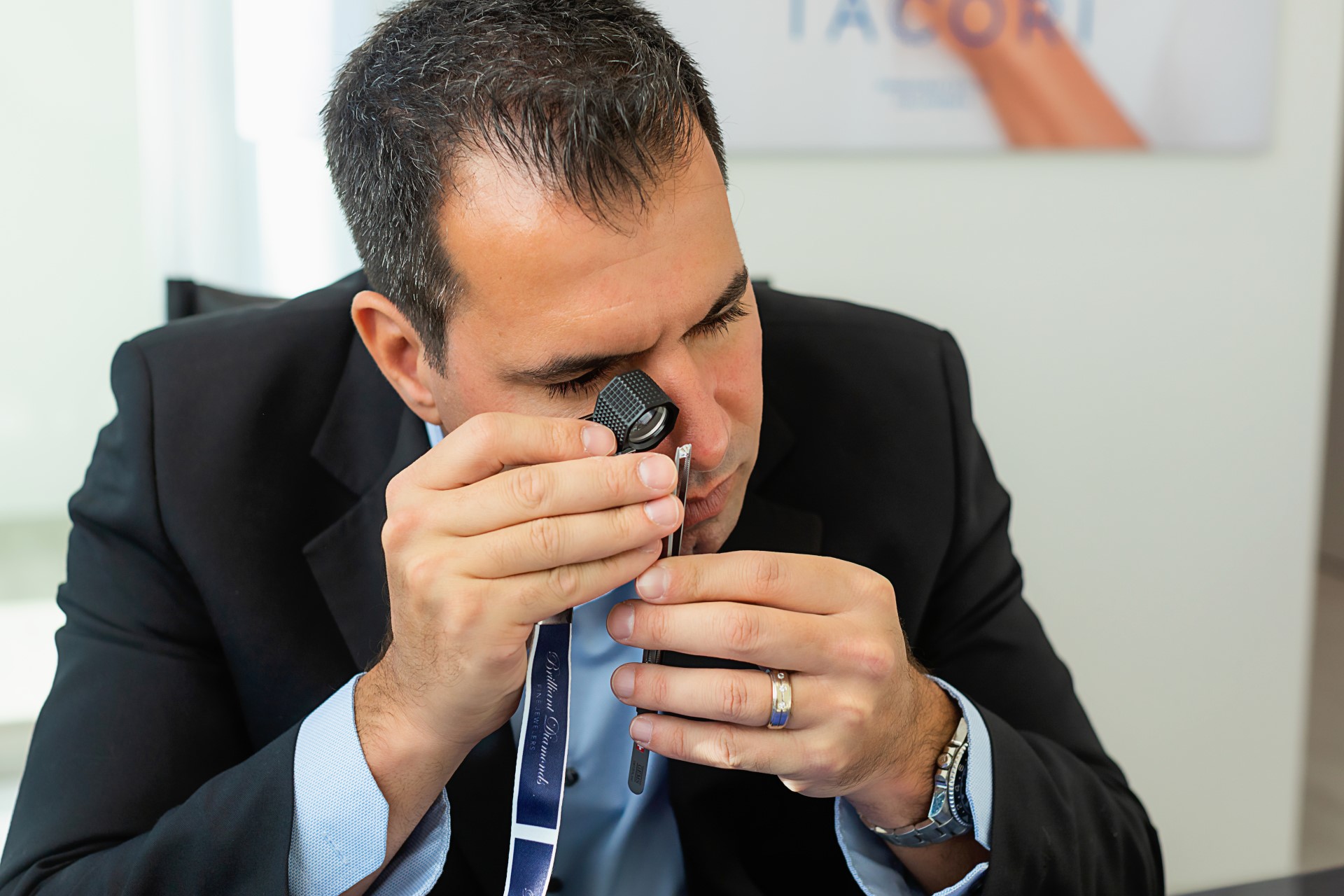
Ariel Berko
Ariel has been working in the diamond industry in San Diego since 1995, bringing decades of hands-on experience and a deep-rooted family background in fine jewelry. A graduate of the Gemological Institute of America (GIA), he is highly trained in diamonds and known for his expertise in both diamond selection and custom jewelry design.
Over the years, Ariel has built a reputation for guiding clients with honesty, precision, and a personalized approach—helping them confidently choose diamonds and create pieces that are both meaningful and enduring.


