
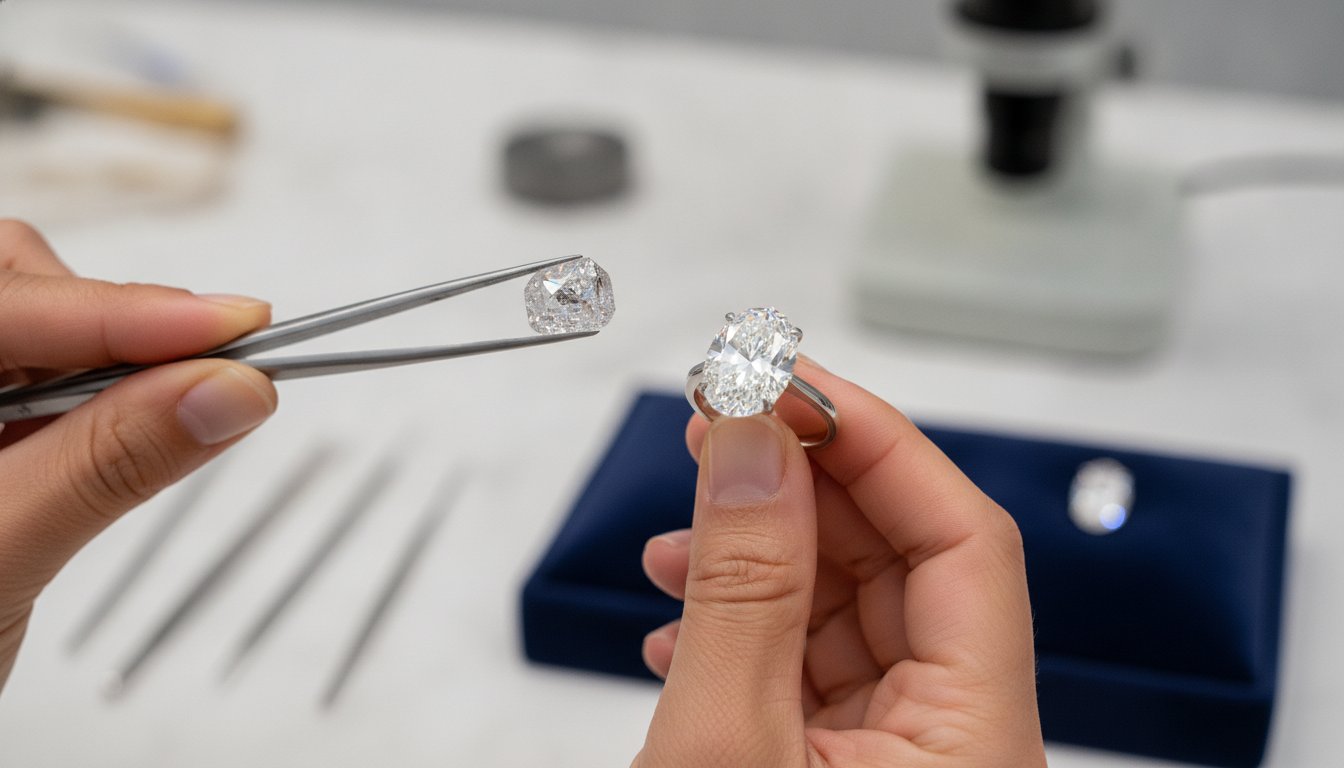
What if you could replicate the earth's billion-year geological miracle in just a few weeks without sacrificing a single atom of beauty? It's a question many of our neighbors here in San Diego ask when they first visit us to explore modern jewelry options. You might feel a sense of skepticism when hearing about diamonds grown in a laboratory, especially with "simulants" like cubic zirconia often clouding the conversation. It's natural to want reassurance that your stone is genuine. We believe in total transparency; that's why understanding how are lab grown diamonds made is the first step toward feeling truly confident in your purchase.
In this article, we'll peel back the curtain on the sophisticated technological processes used to grow diamonds that are chemically, physically, and optically identical to those found in nature. You'll learn the clear differences between the High Pressure High Temperature (HPHT) and Chemical Vapor Deposition (CVD) methods without getting lost in technical jargon. We'll show you how these stones achieve their incredible brilliance and how you can evaluate their quality for yourself. By the time you're finished, you'll have the knowledge needed to choose a diamond that represents both your values and your enduring commitment.
Key Takeaways
- Understand that lab-grown stones are 100% pure carbon and share the exact same chemical and physical properties as natural diamonds.
- Explore the fascinating science behind how are lab grown diamonds made, including the HPHT and CVD methods that replicate nature's most extreme environments.
- Discover why the role of a master diamond cutter is essential to ensuring your lab-grown stone possesses the fire and brilliance you expect from fine jewelry.
- Learn how to leverage the more accessible price point of lab-grown diamonds to secure a larger, higher-quality stone for your significant life purchase.
- Gain confidence in your choice by understanding why viewing these gems in person is the best way to evaluate their unique light performance and beauty.
Understanding the Science: What Are Lab-Grown Diamonds?
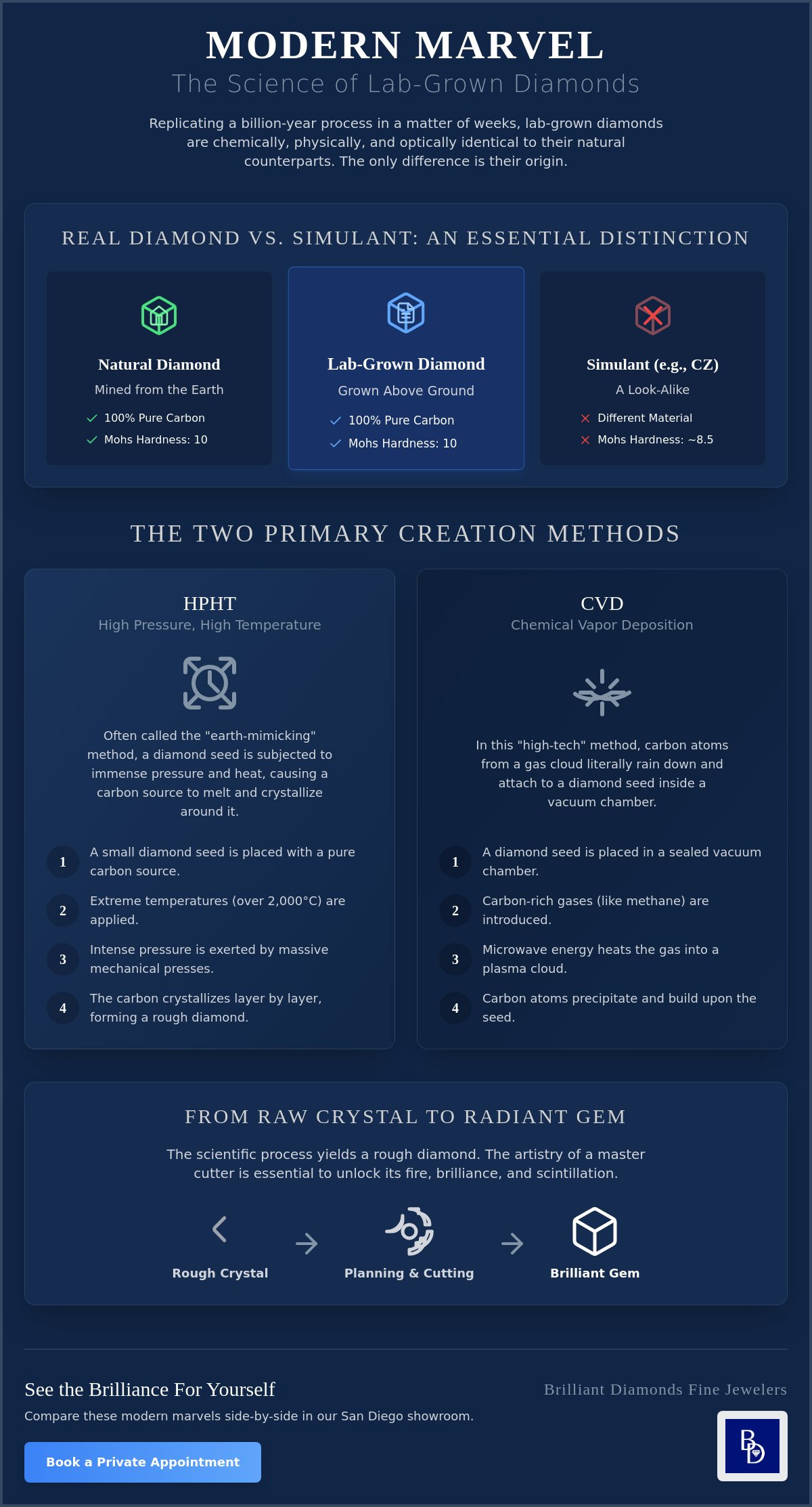
To truly understand What Are Lab-Grown Diamonds?, we must look past the marketing and focus on the science. Every lab-grown gem we showcase in our San Diego studio consists of 100% pure carbon. These aren't imitations; they're chemically, physically, and optically identical to stones mined from the earth. The only true difference is the point of origin. While natural diamonds form deep underground over millions of years, lab-grown versions are cultivated above ground in highly specialized environments.
The journey of how are lab grown diamonds made starts with a single diamond seed. This seed is a tiny sliver of a pre-existing diamond that acts as a structural blueprint. Just as a plant grows from a seed in a greenhouse, carbon atoms bond to this sliver to build a rough crystal. By understanding how are lab grown diamonds made, you can appreciate the incredible precision required to replicate nature's most extreme conditions in a fraction of the time.
Many of our clients initially confuse lab diamonds with simulants like Cubic Zirconia or Moissanite. It's an important distinction to make. Simulants are made of different materials that simply mimic the look of a diamond. Lab-grown diamonds are actual diamonds, sharing the same brilliant sparkle and enduring strength that has made this gemstone a symbol of commitment for generations.
The Chemical Identity: Carbon is Carbon
Because they share a carbon structure, both natural and lab-grown diamonds rank a 10 on the Mohs scale of hardness. This means they're equally resistant to scratching and daily wear, providing a lifetime of beauty. To the naked eye, they're indistinguishable. Even with a jeweler's loupe, you won't see a difference. We use specialized, advanced equipment to identify the specific growth patterns that distinguish one from the other. If you'd like to see these stones side-by-side, we invite you to book an appointment at our showroom to compare their brilliance in person.
The Two Primary Methods of Diamond Cultivation
While the earth takes billions of years to forge a diamond, modern technology achieves the same result in just a few weeks. When exploring how are lab grown diamonds made, you'll encounter two sophisticated techniques. Both The Two Primary Methods of Diamond Cultivation result in a rough stone that is chemically identical to its natural counterpart. Whether it's through intense pressure or specialized gases, the goal is to provide the perfect environment for carbon atoms to bond together.
HPHT: Recreating the Earth's Core
High Pressure High Temperature (HPHT) is often called the "earth-mimicking" method. Scientists use massive mechanical presses to subject a small diamond seed and a carbon source to temperatures exceeding 2,000 degrees Celsius. Under this extreme heat, the carbon melts and begins to crystallize layer by layer around the seed. It's a powerful process that captures the raw intensity of the earth's mantle within a controlled laboratory setting.
CVD: Growing Diamonds from a Cloud
Chemical Vapor Deposition (CVD) represents the "high-tech" evolution of diamond growth. In this process, a seed is placed inside a vacuum chamber filled with a carbon-rich gas mixture, typically methane and hydrogen. Microwave energy is then used to break down the gas into a plasma cloud. Carbon atoms literally rain down from this cloud, layering onto the seed to build the crystal structure. This method allows for incredible precision during the growth cycle.
Keep in mind that neither process produces a finished gem immediately. The result is a rough diamond crystal that requires expert processing by hand. Understanding how are lab grown diamonds made helps you appreciate that even these modern marvels require human craftsmanship to reach their full potential. If you have questions about the specific origin of a stone, you can speak with a diamond expert at our San Diego showroom for personalized guidance.
From Raw Crystal to Fine Jewelry: The Refinement Process
The scientific journey of how are lab grown diamonds made often stops at the laboratory door, but for us, that's only the beginning. A common misconception is that these stones emerge from the chamber ready for a setting. In reality, they come out as rough, clouded crystals that look more like sea salt than fine jewelry. The transition From Raw Crystal to Fine Jewelry involves a level of artistry that machines simply cannot replicate. Every stone we offer in our San Diego showroom undergoes a rigorous refinement process to unlock its hidden fire.
Because they are chemically identical to mined gems, lab-grown diamonds exhibit the same 4Cs: Cut, Color, Clarity, and Carat. A master cutter's skill is what determines whether a stone will truly sparkle or appear dull. GIA certification is just as critical for lab-grown stones as it is for natural ones because it provides an objective, third-party verification of the gem's quality and origin.
Precision Cutting and Polishing
Master diamond cutters begin by analyzing the rough crystal's internal structure to determine the best possible shape. Whether it's a timeless Round Brilliant or a modern Oval, the goal is to maximize light performance while minimizing inclusions. The actual cutting and polishing process is identical for both natural and lab-grown diamonds. It requires the same steady hand and specialized diamond-tipped tools to create the precise facets that reflect light.
Independent Grading and Laser Inscriptions
Reputable lab diamonds always come with independent grading reports from authorities like the GIA or IGI. These documents are your guarantee of quality and value. For absolute transparency, these gems feature a microscopic laser inscription on the girdle. This mark identifies the stone as laboratory-grown, ensuring it can never be confused with a natural diamond. If you'd like to see these inscriptions under a microscope, contact our team to schedule a personal demonstration in our showroom.
Why the Growth Method Matters for Your Selection
Choosing the right stone often comes down to your personal priorities and values. When you understand how are lab grown diamonds made, the most immediate benefit you'll notice is the value proposition. You can often obtain a significantly larger, higher-quality gem for a more accessible investment than a mined alternative. This means you don't have to compromise on the sparkle or size you've always imagined for your ring. We believe every customer deserves to feel proud of their purchase, and lab-grown options provide a transparent path to that goal.
Sustainability and Ethical Transparency
A modern diamond lab offers a clear, traceable origin story that resonates with many of our neighbors. Knowing the exact history of your stone provides a sense of security and peace of mind. For many modern couples, the technological origin of their diamond is a point of pride. It represents a forward-thinking choice that values both beauty and innovation. You aren't just buying a piece of jewelry; you're choosing a gem that aligns with a more transparent future for the industry.
Viewing Lab-Grown Diamonds in San Diego
While reading about how are lab grown diamonds made is helpful, seeing the brilliance in person is essential. We invite you to visit a professional jewelry store in San Diego to compare natural and lab-grown options side-by-side. Whether you're in Downtown or North County, our team is here to help you evaluate light performance under a loupe. You can see firsthand how HPHT and CVD stones differ in person. We'd love to help you find the perfect stone for your story. Please book an appointment today for a personalized diamond education session with one of our experts.
Find Your Brilliance in San Diego
Choosing a diamond is a significant milestone, and having a clear understanding of how are lab grown diamonds made ensures you can move forward with absolute certainty. Whether you're drawn to the high-tech precision of the CVD process or the earth-mimicking power of HPHT, the result is a stunning gem that's chemically identical to a natural stone. The true beauty of these diamonds is unlocked by expert cutting and verified by independent certification, providing you with a transparent and ethical origin story for your piece.
Since 2004, we've served as San Diego's trusted local jeweler, offering a full selection of both lab-grown and natural diamonds. Our GIA certified experts are here to guide you through the selection process, helping you compare options side-by-side in a relaxed, professional environment. We don't just sell jewelry; we build lifelong relationships focused on your investment's security and care. We invite you to Schedule a Consultation at Our San Diego Showroom to discover the perfect stone for your commitment. We look forward to helping you celebrate your most cherished moments.
Frequently Asked Questions
Are lab-grown diamonds real diamonds?
Yes, lab-grown diamonds are 100% real. They possess the exact same chemical, physical, and optical properties as diamonds mined from the earth. Unlike simulants that merely look like diamonds, these are pure carbon crystals. They rank a 10 on the Mohs scale of hardness, ensuring they last a lifetime. When you choose a lab-grown stone, you're receiving a genuine diamond that offers the same fire and brilliance as a natural one.
Can a jeweler tell the difference between a lab-grown and natural diamond?
A jeweler cannot distinguish between the two with the naked eye or a standard magnifying loupe. Because the material is identical, we use specialized laboratory equipment to identify the specific growth patterns that occur during the cultivation process. At our San Diego showroom, we prioritize transparency by providing independent grading reports. This ensures you have full confidence in the origin and quality of your investment.
Do lab-grown diamonds get cloudy or change color over time?
No, lab-grown diamonds will never become cloudy or change color over time. Because they are composed of the same stable carbon structure as natural diamonds, their appearance is permanent. They don't degrade, fade, or lose their sparkle like fashion jewelry or simulants might. We stand behind every stone we sell, celebrating the enduring commitment that these permanent gems represent for our community.
Which is better: HPHT or CVD diamonds?
Neither method is objectively superior, as both HPHT and CVD produce exceptionally high-quality stones. HPHT typically mimics the earth's natural pressure, while CVD uses advanced gas technology. When you're learning how are lab grown diamonds made, you'll discover that the final grading of the 4Cs matters more than the growth technique. We invite you to view different options side-by-side to see which stone speaks to you.
Why are lab-grown diamonds less expensive if they are the same material?
Lab-grown diamonds are more accessible because the production process is significantly more efficient than traditional mining. Eliminating the need for massive excavation and complex global supply chains reduces the overhead costs. While the science of how are lab grown diamonds made is sophisticated, it allows us to pass those savings on to you. You can secure a larger, higher-quality diamond that fits your budget perfectly.
Article by
Ariel Berko
Ariel has been working in the diamond industry in San Diego since 1995, bringing decades of hands-on experience and a deep-rooted family background in fine jewelry. A graduate of the Gemological Institute of America (GIA), he is highly trained in diamonds and known for his expertise in both diamond selection and custom jewelry design.
Over the years, Ariel has built a reputation for guiding clients with honesty, precision, and a personalized approach—helping them confidently choose diamonds and create pieces that are both meaningful and enduring.


